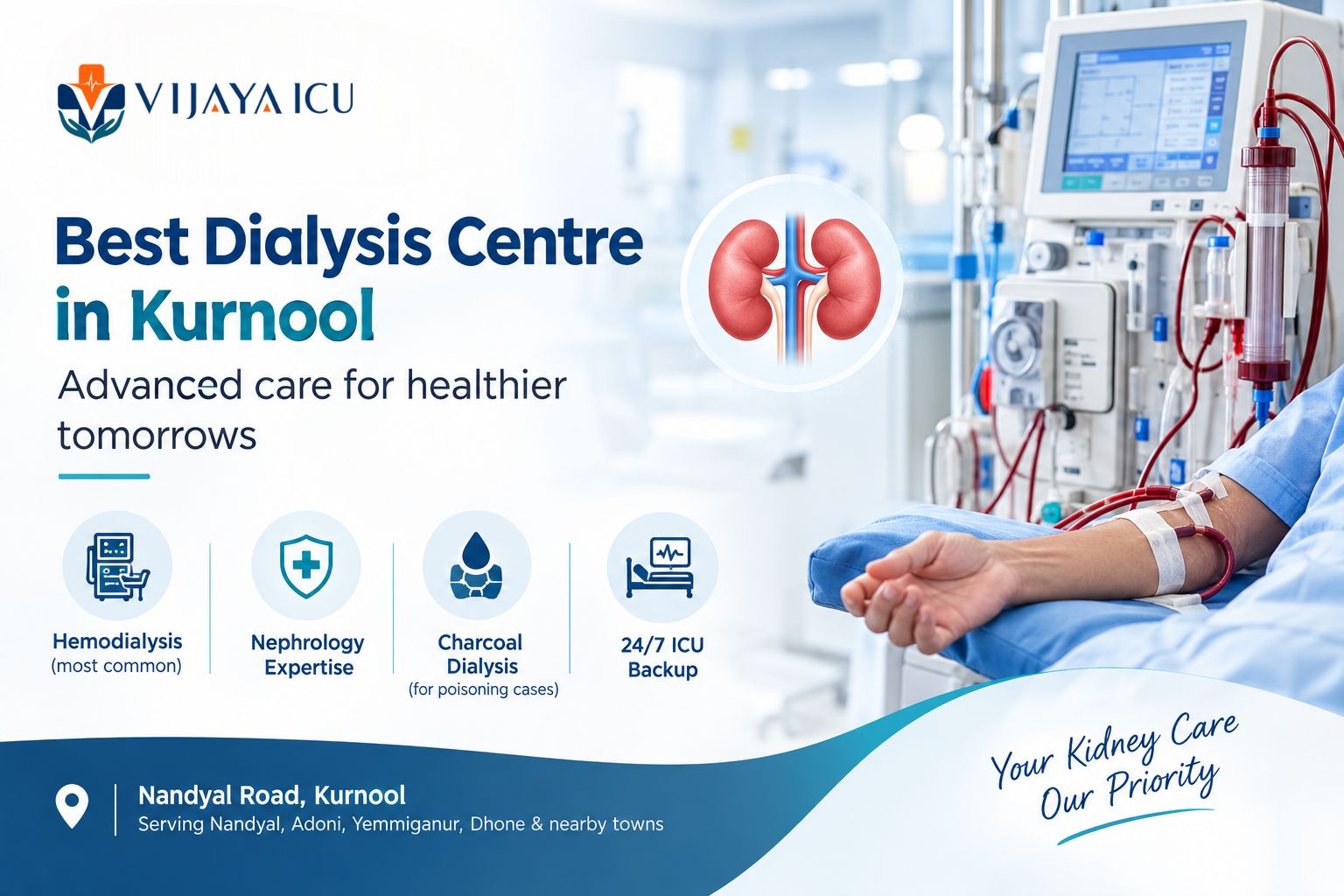
Best Dialysis Centre in Kurnool: Signs You Need Hemodialysis and What to Expect
The best dialysis centre in Kurnool should offer safe hemodialysis with trained staff, an experienced nephrology team, and 24/7 ICU backup for emergencies. Dialysis is needed when the kidneys can no longer filter waste and fluid from the blood, usually in advanced kidney failure or sudden kidney injury caused by infection or poisoning. Vijaya ICU & Multispeciality Hospital on Nandyal Road, Kurnool, provides hemodialysis, charcoal dialysis and nephrology care with round-the-clock critical care support.
Your kidneys work quietly every minute of the day. They filter waste, balance fluids and salts, control blood pressure, and help make red blood cells. When they fail, toxins and fluid build up in the body, and that can become life-threatening.
Kidney disease is rising across Andhra Pradesh, largely because of diabetes and high blood pressure. Many patients only discover it at a late stage, when dialysis has become necessary. Understanding the warning signs and knowing what dialysis involves can make this journey far less frightening, and so can choosing the best dialysis centre in Kurnool for your care.
How Does Dialysis Work When Your Kidneys Fail?
Dialysis is a medical treatment that performs some of the functions of the kidneys when they stop working properly. It:
- Removes waste products such as urea and creatinine.
- Removes extra fluid that causes swelling and breathlessness.
- Balances potassium, sodium and other minerals.
- Helps control blood pressure.
There are two main types of dialysis:
| Type | How It Works | Where It's Done |
|---|---|---|
| Hemodialysis | Blood is pumped through a machine with a special filter called a dialyser and then returned to the body. | Hospital or dialysis unit |
| Peritoneal Dialysis | A special fluid placed in the abdomen absorbs waste and is subsequently drained out. | Usually at home |
Hemodialysis is a commonly used form of dialysis in India.
When Is Dialysis Needed for Kidney Patients?
1. Chronic Kidney Disease (CKD), Stage 5
When kidney function drops to around 10–15% or less of normal, dialysis may be required, depending on symptoms, test results and complications. Common causes of advanced kidney disease include:
- Long-standing diabetes.
- Uncontrolled high blood pressure.
- Kidney stones or repeated urinary infections.
- Overuse of painkillers.
- Inherited kidney conditions.
2. Acute Kidney Injury (AKI)
Sometimes, the kidneys fail suddenly because of:
- Severe infection (sepsis).
- Poisoning or snakebite.
- Severe dehydration, heavy blood loss or low blood pressure.
- Certain medicines.
In many cases of acute kidney injury, dialysis is temporary, and the kidneys may recover with timely treatment and appropriate ICU care.
Warning Signs Your Kidneys May Be Failing
Kidney disease is often called a "silent disease" because early stages may cause few symptoms. Consult a doctor if you notice:
- Swelling in the feet, ankles, face or around the eyes.
- Passing much less urine or noticing persistently foamy urine.
- Constant tiredness and weakness.
- Breathlessness, even at rest.
- Loss of appetite, nausea or vomiting.
- Itchy skin.
- Difficulty sleeping or concentrating.
- High blood pressure that is difficult to control.
⚠️ When to seek emergency care: Severe breathlessness, confusion, chest pain, very little or no urine, or seizures require urgent medical attention. These symptoms may indicate serious complications.
💡 Kidney health tip: If you have diabetes or high blood pressure, ask your doctor how often you should undergo kidney screening. Tests may include serum creatinine with eGFR and a urine albumin test. Annual testing is commonly recommended, although your doctor may advise more frequent checks.
What Happens During a Hemodialysis Session?
Many patients worry about their first dialysis session. Here is what usually happens:
- Before dialysis: Your weight, blood pressure and temperature are checked to help determine how much fluid needs to be removed.
- Access connection: Needles are placed in an arteriovenous (AV) fistula, which connects an artery and vein, usually in the arm. Alternatively, a dialysis catheter may be used.
- Cleaning the blood: Blood flows through the dialyser, which filters out waste and extra fluid, before returning the blood to your body.
- Monitoring: Dialysis staff monitor your blood pressure and comfort throughout the procedure.
- After dialysis: Needles are removed, the access site is bandaged, and you can usually return home if your condition is stable.
How Long Does a Dialysis Session Take?
Many maintenance hemodialysis sessions last around four hours and are scheduled two to three times a week. Your nephrologist will determine the appropriate duration and frequency for your condition.
Does Dialysis Hurt?
Needle insertion may cause brief discomfort. The dialysis process itself is generally painless. Some patients experience tiredness, muscle cramps or light-headedness afterwards, which the medical team can help manage.
What Is Charcoal Dialysis?
Charcoal dialysis, also called charcoal hemoperfusion, is a specialised treatment used mainly in certain types of poisoning and drug overdose. The patient's blood passes through a cartridge containing activated charcoal, which absorbs specific toxins before the blood is returned to the body.
It is not a routine treatment for kidney failure. It is used in selected poisoning cases when doctors determine that it may be beneficial, often in a critical care setting. Vijaya ICU & Multispeciality Hospital offers charcoal dialysis as part of its critical care services for poisoning cases.
Living Well on Dialysis
Dialysis does not necessarily mean giving up an active life. Many patients continue to work, travel and spend time with family. Following your treatment plan and making appropriate lifestyle changes can help:
- Never skip sessions: Missed dialysis can cause dangerous fluid and potassium build-up.
- Limit fluids: Follow your doctor's advice on fluid intake, including tea, soups and water-rich fruits.
- Reduce salt: Lower salt intake can help manage thirst and blood pressure.
- Monitor potassium: Your dietitian may advise limiting foods such as bananas, coconut water, oranges and tomatoes, depending on your blood potassium levels.
- Limit phosphorus when advised: Pay attention to phosphorus in processed foods, colas and some dairy products.
- Take medicines on time: Follow your prescription, particularly for blood pressure, anaemia and bone health.
- Protect your fistula arm: Avoid tight clothing or jewellery, blood pressure measurements and injections on that arm unless your healthcare team advises otherwise.
- Control diabetes and blood pressure: These measures help protect your heart and blood vessels.
Can Kidneys Recover After Dialysis?
In acute kidney injury: Yes. The kidneys may recover partly or fully, allowing dialysis to be stopped when it is no longer needed.
In end-stage chronic kidney disease: Kidney damage is usually permanent. Long-term treatment options may include regular dialysis or a kidney transplant.
Your nephrologist will assess your condition, monitor kidney function and guide you on the most appropriate treatment.
Why Choose Vijaya ICU as Your Dialysis Hospital in Kurnool?
Vijaya ICU & Multispeciality Hospital provides dialysis and critical care services for patients who require kidney-related treatment and medical support.
- Hemodialysis services with trained dialysis staff.
- Nephrology care for diagnosis, treatment and long-term kidney management.
- Charcoal dialysis for selected poisoning emergencies.
- 24/7 ICU backup for critically ill patients and acute kidney injury cases.
- Multispeciality support, including general medicine, cardiology and diabetes care.
- A 100-bedded hospital on Nandyal Road, Kurnool, serving patients from Nandyal, Adoni, Yemmiganur, Dhone and nearby towns.
Frequently Asked Questions
Which Is the Best Dialysis Centre in Kurnool?
When choosing a dialysis centre, look for safe dialysis facilities, trained staff, appropriate nephrology support and access to emergency care. Vijaya ICU & Multispeciality Hospital on Nandyal Road, Kurnool, provides hemodialysis, nephrology care and critical care support. Call +91 7842 67 4920 to enquire about a consultation or dialysis appointment.
How Do I Know If I Need Dialysis?
Your doctor will assess blood tests, including creatinine, eGFR and potassium, along with symptoms and other clinical findings. Swelling, breathlessness, vomiting and reduced urine output may indicate kidney problems. Dialysis decisions depend on the overall clinical condition, not just a single test result.
How Many Times a Week Is Dialysis Needed?
Many patients receiving maintenance hemodialysis need two to three sessions per week, with each session lasting around four hours. Your nephrologist will recommend a schedule based on your needs.
Is Dialysis Permanent?
Not always. Dialysis for acute kidney injury may be temporary if kidney function recovers. For end-stage chronic kidney disease, dialysis is generally a long-term treatment unless a kidney transplant or another appropriate treatment changes the plan.
Can Diabetic Patients Prevent Kidney Failure?
Good blood sugar and blood pressure control, avoiding unnecessary use of painkillers, and regular kidney screening can reduce the risk of kidney damage and help slow disease progression.
What Is the Difference Between Hemodialysis and Charcoal Dialysis?
Hemodialysis removes waste and excess fluid from the blood when the kidneys cannot perform these functions adequately. Charcoal dialysis, or hemoperfusion, uses an adsorbent cartridge to remove certain poisons or drugs in selected emergency cases.
Book Your Dialysis Session at Kurnool's Kidney Care Centre
Do not ignore persistent swelling, breathlessness or reduced urine output. These symptoms may indicate a kidney problem that needs medical attention. The nephrology and dialysis team at Vijaya ICU & Multispeciality Hospital can assess your condition and guide you through the available treatment options.
Hospital: Vijaya ICU & Multispeciality Hospital
Address: 2nd Floor, Revenue Colony, Nandyal Road, Kurnool – 518002, Andhra Pradesh
24x7 OP Appointments: +91 7842 67 4920
Emergency: +91 7842 83 4920