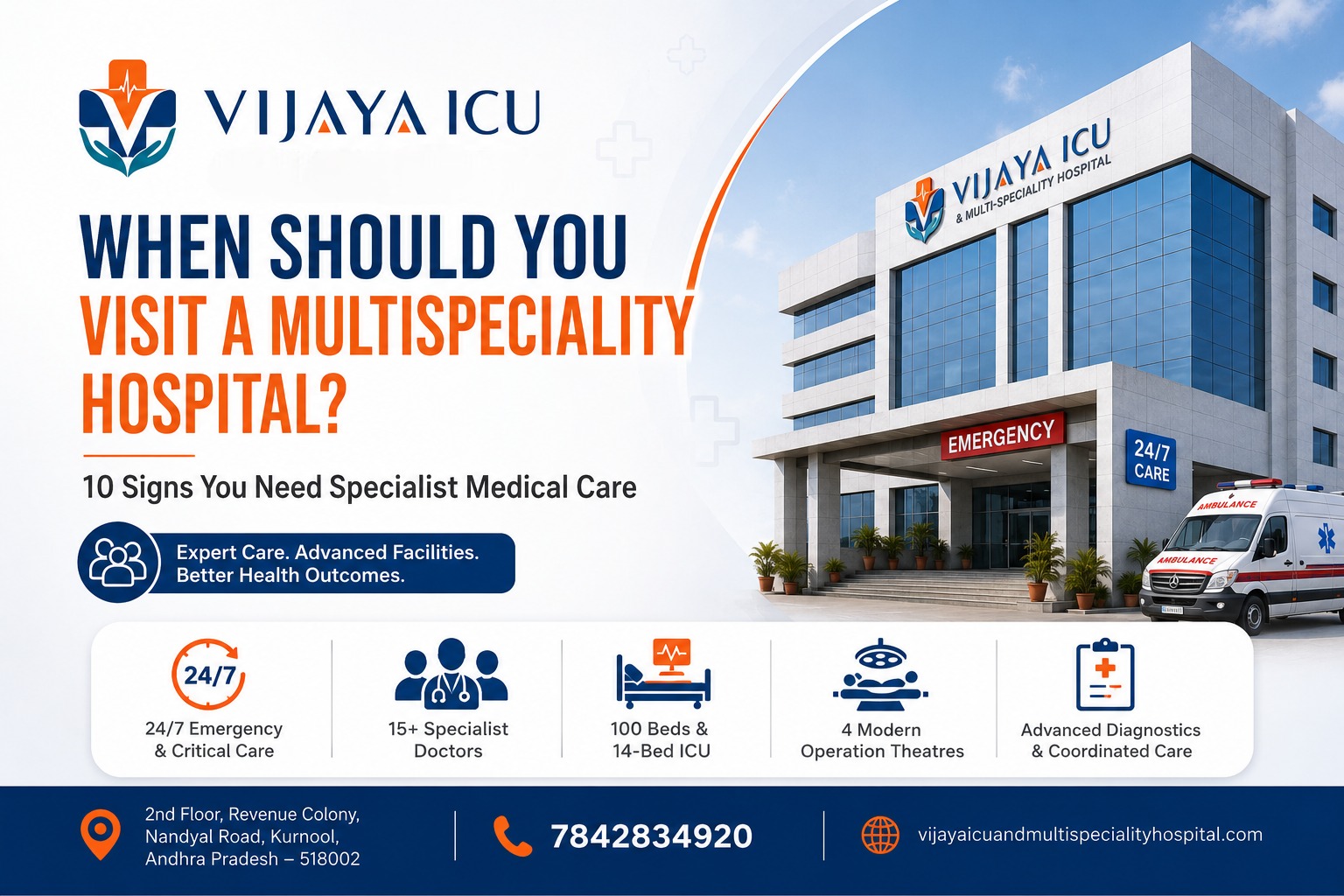
When Should You Visit a Multispeciality Hospital? 10 Signs You Need Specialist Medical Care
Knowing when to visit a hospital can make an important difference in managing a health problem effectively. While many common health issues can be managed with routine medical care, certain symptoms, persistent conditions, injuries, and sudden changes in health may require evaluation by a specialist.
A multispeciality hospital in Kurnool can be particularly helpful when a patient needs access to different medical specialties, diagnostic services, surgical care, or emergency and critical care under one roof. Instead of visiting multiple facilities for different health concerns, patients can receive coordinated care based on their individual medical needs.
But how do you know when it is time to consult a specialist?
Here are 10 important signs that indicate you may need specialist medical care.
What Is a Multispeciality Hospital?
A multispeciality hospital brings together doctors and healthcare professionals from different medical specialties in one facility. Depending on the hospital, these may include emergency and critical care, general medicine, orthopaedics, cardiology, neurology, gastroenterology, pulmonology, general surgery, urology, ophthalmology and other specialties.
The advantage is that patients can receive evaluation and treatment from the appropriate specialist while having access to supporting medical services when required.
At Vijaya ICU & Multi-Speciality Hospital, Kurnool, comprehensive healthcare is supported by specialist doctors, intensive care facilities, modern operation theatres and 24/7 emergency and critical care services
10 Signs You May Need Specialist Medical Care
1. Your Symptoms Are Persistent or Getting Worse
Some health problems improve with rest, medication and routine care. However, if symptoms continue for several days, repeatedly return, or gradually become worse, it may be time for a detailed medical evaluation
Persistent symptoms such as:
- Continuous or recurring pain
- Long-lasting cough
- Repeated headaches
- Persistent abdominal discomfort
- Unexplained fatigue
- Recurring digestive problems
- Ongoing joint or back pain
should not always be ignored
A specialist can evaluate the underlying cause and recommend appropriate diagnostic tests or treatment
2. You Experience Severe or Unexplained Pain
Pain is one of the body's important warning signals. Mild pain may sometimes resolve with appropriate rest and routine treatment, but severe, sudden, recurring, or unexplained pain requires medical attention
Chest pain, severe abdominal pain, intense headache, sudden back pain, or significant joint pain can have different causes and may require evaluation by a relevant specialist
If severe pain develops suddenly or is accompanied by symptoms such as difficulty breathing, fainting, confusion, weakness or sweating, seek emergency medical care immediately
3. You Have Difficulty Breathing
Breathing difficulties should never be ignored, particularly when they develop suddenly or become severe
Shortness of breath may be associated with respiratory conditions, heart-related problems, infections, allergic reactions or other medical conditions
A specialist evaluation can help determine the underlying cause and identify the appropriate treatment
If breathing difficulty is severe, sudden, or associated with chest pain, bluish lips, confusion or loss of consciousness, emergency medical care should be sought immediately
4. You Notice Sudden Neurological Changes
Certain changes involving the brain and nervous system require immediate attention
Warning signs may include:
- Sudden weakness or numbness
- Difficulty speaking
- Facial drooping
- Loss of balance
- Sudden confusion
- Seizures
- Sudden severe headache
- Loss of consciousness
These symptoms can sometimes indicate serious neurological conditions, including stroke
When neurological symptoms appear suddenly, do not wait for them to disappear on their own. Prompt medical assessment is important because some neurological emergencies require treatment as quickly as possible
5. You Have Repeated Heart-Related Symptoms
Recurring chest discomfort, palpitations, unusual breathlessness, dizziness, or unexplained fatigue may require evaluation by a medical professional
People with risk factors such as diabetes, high blood pressure, high cholesterol, obesity, smoking history, or a family history of heart disease may need particular attention to cardiovascular symptoms
Sudden chest pressure or pain, especially when accompanied by sweating, nausea, shortness of breath, or pain spreading to the arm, shoulder, back, neck or jaw, should be treated as a medical emergency
6. You Have a Serious Injury or Accident
Accidents and falls can cause injuries that may not always be obvious immediately
A person may appear well after an accident but still have internal injuries, fractures, head injuries, or other complications
Medical evaluation is particularly important after:
- Road traffic accidents
- Significant falls
- Head injuries
- Severe cuts or wounds
- Suspected fractures
- Multiple injuries
- Loss of consciousness after an injury
Hospitals with emergency, critical care and specialist support can help assess and manage serious injuries quickly
Vijaya ICU & Multi-Speciality Hospital lists polytrauma and head injuries among the conditions managed through its emergency and critical care services
7. You Have Digestive Problems That Keep Returning
Occasional digestive discomfort may not always indicate a serious problem. However, recurring or persistent digestive symptoms deserve medical evaluation
You should consider consulting a doctor if you experience:
- Recurrent abdominal pain
- Persistent acidity or indigestion
- Frequent vomiting
- Difficulty swallowing
- Persistent diarrhoea or constipation
- Blood in stool
- Unexplained weight loss
- Recurrent bloating
Depending on the symptoms, a general physician or gastroenterologist may recommend further evaluation
8. Your Joint, Bone, or Muscle Problems Affect Daily Life
Pain or stiffness in the knees, shoulders, back, hips or other joints can gradually affect mobility and quality of life
If pain persists despite routine treatment, keeps returning, or makes it difficult to walk, work, exercise or perform everyday activities, specialist evaluation may be beneficial
Orthopaedic specialists can evaluate conditions involving bones, joints, muscles, ligaments and other parts of the musculoskeletal system and recommend appropriate treatment
At Vijaya ICU & Multi-Speciality Hospital, orthopaedic care is part of the hospital's specialist services
9. You Need Surgery or Advanced Medical Treatment
Some medical conditions cannot be effectively managed through medication alone
If your doctor identifies a condition that may require surgery, a procedure, advanced monitoring, or specialized treatment, choosing a hospital with multiple supporting specialties can be beneficial
A multispeciality hospital can provide access to specialist consultations, diagnostic support, surgical facilities, anaesthesia services, intensive care and post-treatment monitoring when required
This coordinated approach can help simplify the patient's treatment journey
10. You Have a Medical Emergency
Some symptoms require immediate medical attention rather than waiting for a routine appointment
Seek emergency medical care for symptoms such as:
- Severe breathing difficulty
- Sudden chest pain
- Loss of consciousness
- Severe bleeding
- Sudden weakness or paralysis
- Seizures
- Serious accident or trauma
- Severe head injury
- Signs of stroke
- Severe allergic reactions
- Serious poisoning or snake bites
Vijaya ICU & Multi-Speciality Hospital provides 24/7 emergency and critical care services and lists conditions including sepsis and shock, respiratory failure, cardiac failure, brain stroke, intracranial bleeding, poisoning and snake bite cases among the conditions it treats
Why Choose a Multispeciality Hospital for Complex Health Problems?
One of the biggest advantages of a multispeciality hospital is access to different areas of medical expertise in one location
Complex health problems can sometimes involve more than one system of the body. For example, a patient may require emergency stabilization followed by specialist consultation, diagnostic evaluation, surgery, intensive care or rehabilitation
Having multiple specialties available can make coordination between different areas of care more convenient
A multispeciality hospital may offer:
Multiple Specialist Departments
Patients can access appropriate medical specialists based on their condition instead of relying on a single department
Advanced Diagnostic Support
Timely diagnosis is an important part of effective treatment. Hospitals with appropriate diagnostic infrastructure can support doctors in evaluating medical conditions
Emergency and Critical Care
For patients with serious or life-threatening conditions, immediate intervention and continuous monitoring can be essential
Surgical Facilities
Patients requiring surgical treatment can benefit from access to operation theatres, surgical specialists, anaesthesia support and post-operative monitoring
Coordinated Patient Care
When different specialists are available within the same healthcare facility, communication and coordination can become easier, particularly for complex cases
Why Consider Vijaya ICU & Multi-Speciality Hospital in Kurnool?
Vijaya ICU & Multi-Speciality Hospital is a 100-bedded multispeciality hospital in Kurnool focused on comprehensive medical care across multiple specialties
The hospital has:
- 100 beds
- 14-bed ICU
- 15 specialist doctors
- 4 modern operation theatres
- 12 OPD consultation rooms
- 24/7 emergency and critical care services
Its team includes specialists in areas such as emergency and critical care medicine, orthopedics, general surgery, anesthesia, ophthalmology, general medicine, gastroenterology, pulmonology and cardiology
The hospital's approach is designed around integrated specialty care, timely evaluation, critical stabilization and continuous monitoring for patients who require medical attention
When Should You Go Directly to the Emergency Department?
Not every health concern requires an emergency visit. However, certain symptoms should be evaluated immediately
Go to an emergency department or seek urgent medical assistance if you experience:
- Sudden chest pain or severe breathing difficulty
- Stroke-like symptoms
- Severe bleeding
- Loss of consciousness
- Serious accident or trauma
- Severe head injury
- Seizures
- Sudden severe confusion
- Severe allergic reaction
- Serious poisoning or snake bite
- Rapid deterioration of an existing medical condition
When in doubt about a potentially life-threatening condition, it is safer to seek urgent medical evaluation rather than delay treatment
Conclusion
Knowing when to seek specialist medical care can help you take action before a health problem becomes more complicated. Persistent symptoms, unexplained pain, breathing difficulties, neurological changes, recurring heart-related symptoms, serious injuries and conditions requiring surgery or advanced treatment may require evaluation beyond routine medical care
A multispeciality hospital in Kurnool can provide the advantage of bringing different medical specialties, emergency services, diagnostics, surgical facilities and critical care support together
If you or your family member is experiencing concerning symptoms, consult a qualified medical professional for appropriate evaluation and treatment
For patients looking for comprehensive healthcare in Kurnool, Vijaya ICU & Multi-Speciality Hospital provides specialist consultations along with 24/7 emergency and critical care services
Frequently Asked Questions (FAQs)
1. What is a multispeciality hospital?
A multispeciality hospital is a healthcare facility where doctors from different medical specialties provide diagnosis and treatment. It may include departments such as general medicine, cardiology, orthopaedics, neurology, gastroenterology, surgery, emergency medicine and critical care
2. When should I visit a multispeciality hospital?
You should consider visiting a multispeciality hospital when symptoms are persistent, worsening, unexplained, or require evaluation by a specialist. It can also be useful when a condition requires multiple specialists, surgery, advanced diagnostics or critical care.
3. What symptoms require immediate medical attention?
Symptoms such as severe chest pain, serious breathing difficulty, loss of consciousness, sudden weakness, seizures, severe bleeding, serious injuries and stroke-like symptoms require urgent medical evaluation.
4. Can I visit a multispeciality hospital for a routine health problem?
Yes. Multispeciality hospitals can provide routine consultations as well as specialized and emergency care. A doctor can assess your symptoms and guide you to the appropriate specialist if necessary
5. Why is specialist care important?
Specialists have focused training and experience in particular areas of medicine. Specialist evaluation can help identify the cause of specific or complex health problems and determine an appropriate treatment plan
6. What specialties are available at Vijaya ICU & Multi-Speciality Hospital?
Vijaya ICU & Multi-Speciality Hospital has specialist doctors across areas including emergency and critical care medicine, orthopedics, general surgery, anesthesia, ophthalmology, general medicine, gastroenterology, pulmonology and cardiology
7. Does Vijaya ICU & Multi-Speciality Hospital provide emergency care?
Yes. Vijaya ICU & Multi-Speciality Hospital provides 24/7 emergency and critical care services for patients requiring immediate medical attention and continuous monitoring
8. What should I do if I am unsure whether my symptoms are an emergency?
If symptoms are severe, sudden, rapidly worsening, or potentially life-threatening, seek urgent medical attention rather than waiting for a routine consultation. If you are unsure, contact a qualified healthcare professional for guidance
9. Does every persistent symptom require specialist treatment?
Not necessarily. A persistent symptom should first be medically evaluated. A general physician may be able to diagnose and manage the condition or refer you to an appropriate specialist when necessary
10. Where is Vijaya ICU & Multi-Speciality Hospital located?
Vijaya ICU & Multi-Speciality Hospital is located at 2nd Floor, Revenue Colony, Nandyal Road, Kurnool, Andhra Pradesh – 518002. The hospital provides 24/7 emergency and critical care services